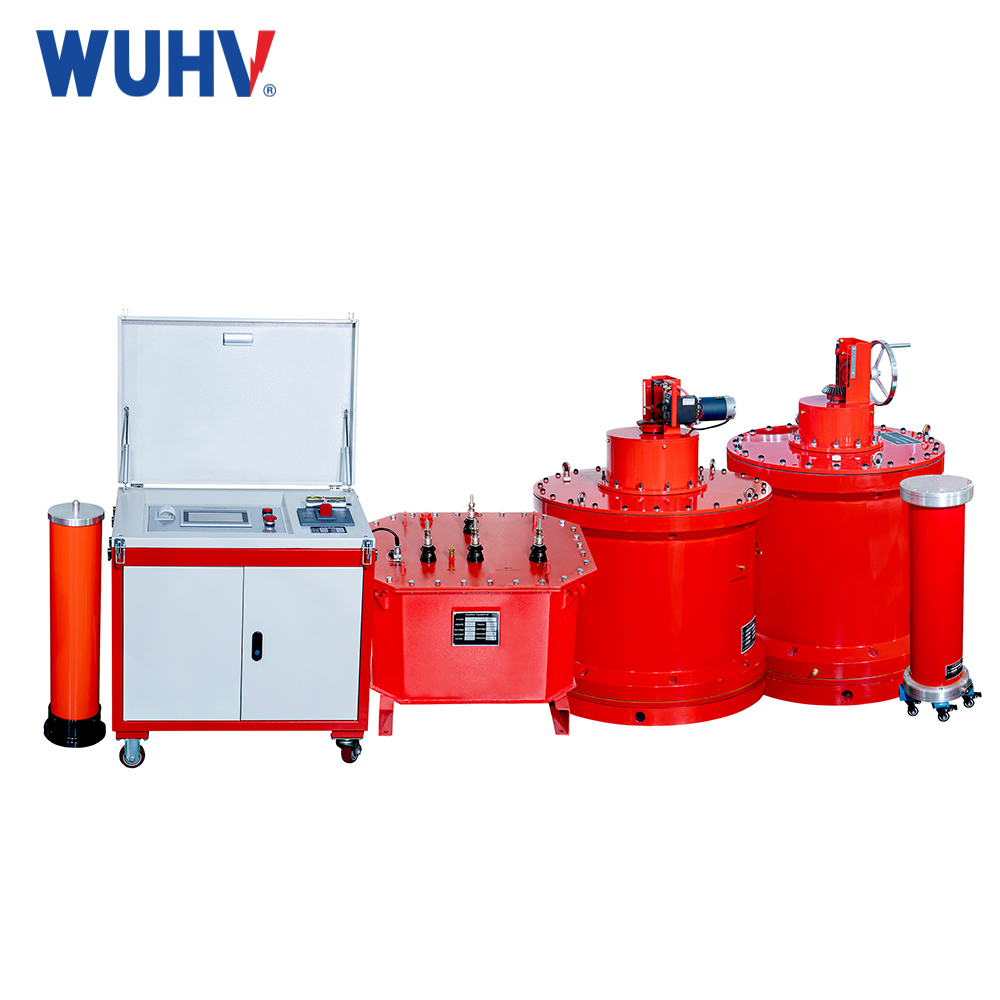
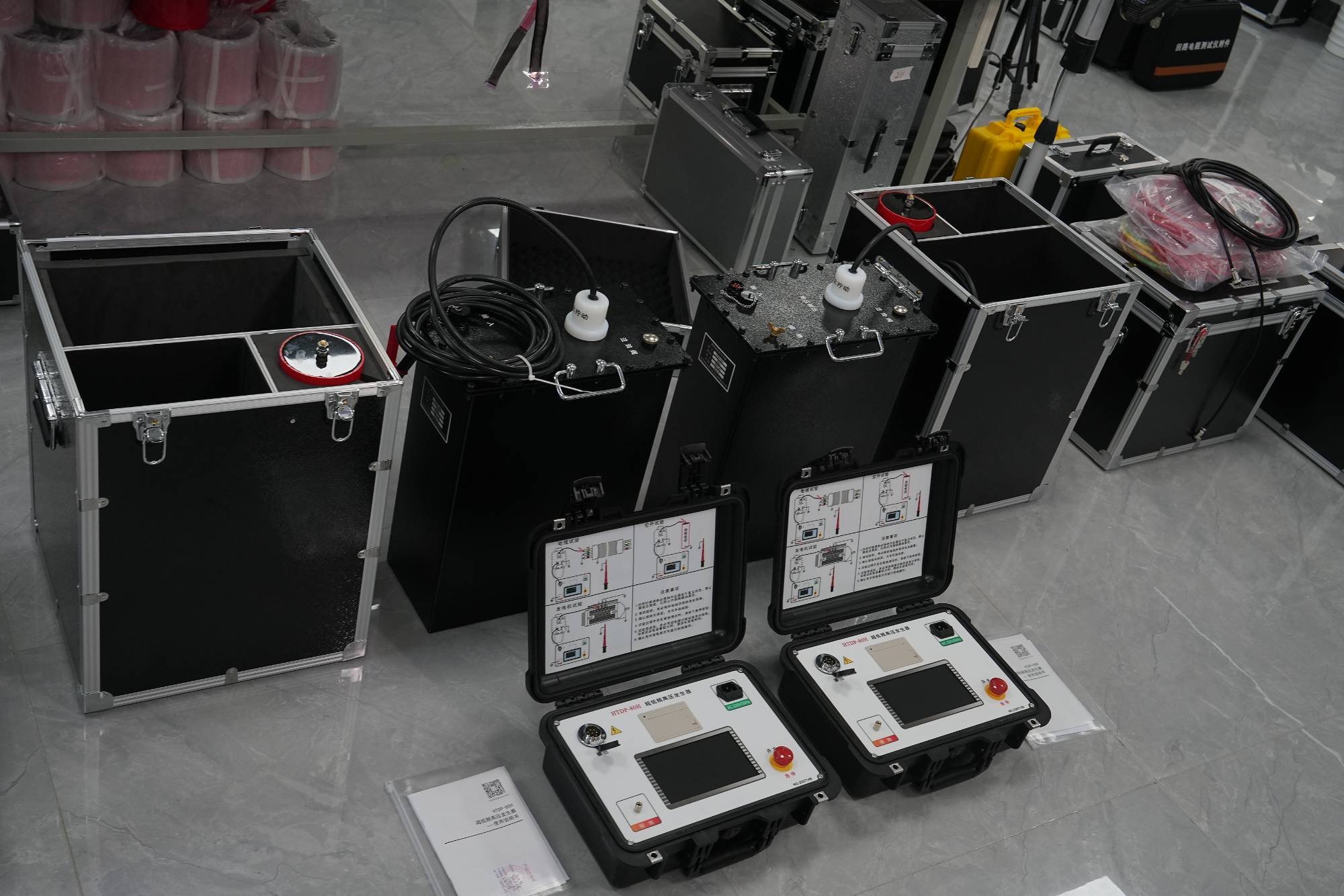
The VLF hipot tester under Wuhan UHV can help many power workers conduct various power tests more conveniently.
1. Use an oscilloscope for observation
a. Connect oscilloscope: Connect the probe of the oscilloscope to the output terminal of the VLF high-voltage generator. During the connection process, it is necessary to ensure that the probe has sufficient voltage resistance and is firmly connected to prevent signal interference or safety accidents.
b. Set oscilloscope parameters: Based on the output frequency and voltage range of the VLF high voltage generator, set the oscilloscope's time axis (time base) and voltage axis (vertical sensitivity). For example, if the output frequency is 0.1Hz, the time base can be set to display enough points per cycle for easy observation of waveform details, such as around 10s/div; For the voltage axis, set it reasonably according to the expected output voltage amplitude to ensure that the waveform can be displayed completely on the oscilloscope screen.
c. Observing waveform shape: A normal VLF high voltage output waveform should be a relatively regular sine wave (for sine wave output generators) or square wave (for square wave output generators). Check whether the waveform is smooth and whether there are obvious distortions such as burrs, dents, flat tops, etc. For a sine wave, its peaks and valleys should be smooth, and the process of voltage rise and fall should be uniform within one cycle.
d. Check waveform frequency: Use the measurement function of the oscilloscope or manually count cycles to verify whether the frequency of the output waveform matches the frequency set by the VLF high voltage generator. For example, if the frequency is set to 0.1Hz, the time to observe 10 cycles on an oscilloscope should be approximately 100s. If the frequency deviation is large, it may be due to problems with the inverter circuit or control circuit inside the generator.
e. Analyze waveform amplitude: Observe whether the amplitude of the waveform matches the expected output voltage. The voltage measurement function of the oscilloscope can be used to measure the voltage value between peaks and valleys (peak to peak), and compare it with the set output voltage of the VLF high voltage generator. If the amplitude deviation exceeds a certain range (such as ± 10%), it may be a fault in the boost circuit or output regulation part.
2. Compare standard waveforms with technical parameters
a. The standard waveform in the reference equipment manual: The product manual for VLF high-voltage generators usually provides standard output waveform diagrams and related technical parameters. Carefully compare the observed waveform with the standard waveform in the manual to see if the shape, frequency, amplitude, and other aspects are consistent.
b. Verify technical parameter specifications: In addition to waveform shape, attention should also be paid to some important technical parameters. For example, for sine wave output, it is necessary to check whether its harmonic distortion is within the specified range (generally high-quality generators have lower harmonic distortion, such as less than 5%); For square wave output, it is necessary to check whether the parameters such as rise time, fall time, and duty cycle meet the requirements. These parameters can be obtained through the advanced measurement function of an oscilloscope or by using a professional signal analyzer.
3. Conduct multiple tests and load change tests
a. Multiple tests to observe stability: Conduct multiple output waveform tests on the VLF high-voltage generator, with a time interval (such as a few minutes) between each test, and observe whether the waveform remains stable during multiple tests. If there are significant differences in waveform shape, frequency, amplitude, and other parameters during each test, it may indicate the presence of unstable factors inside the generator, such as power fluctuations, component aging, or control circuit failures.
b. Change the waveform of the load test: Connect different loads (within the allowed load range) to the output terminal of the VLF high voltage generator and observe the waveform changes. Under normal circumstances, within a reasonable range of load variation, the shape and frequency of the output waveform should remain basically unchanged, and the amplitude may vary according to the characteristics of the load, but the variation pattern should conform to the output characteristics of the device. For example, when the load resistance increases, for a constant voltage output generator, the output current will decrease, and the amplitude should theoretically remain stable; If there are significant fluctuations in amplitude or waveform distortion, it may be due to poor load adaptability of the generator or abnormal internal protection mechanisms.