In the dense channel of high-voltage equipment in the substation, the operation and maintenance personnel hold the detector and slowly move along the weld seam of the high-voltage switch. Suddenly, the instrument emitted a sharp alarm sound - SF6 gas leakage was accurately captured. At the same time, another group of personnel is reading the moisture content in the chamber through a micro water tester, while on the insulation test vehicle, the voltage curve of the withstand voltage test is steadily rising on the screen.

This is a standard scenario for the safe operation and maintenance of modern power systems. With the increasing complexity of power grid equipment, a single detection method can no longer meet safety requirements. The coordinated monitoring of SF6 gas state and insulation strength has become a key technical defense line to ensure the reliable operation of power equipment.
1、 Why is comprehensive testing necessary for the "health triple door" of power equipment?
SF6 gas has become the core medium of high-voltage switchgear due to its excellent insulation and arc extinguishing performance. However, issues such as equipment aging and seal failure may lead to dual hazards:

Gas leakage: directly reducing insulation strength, causing equipment discharge or even explosion
Excessive micro water: Moisture reacts with arc products to produce corrosive substances, accelerating equipment degradation
Insulation degradation: The insulation performance of the equipment body decreases, forming a safety vulnerability
The three have a strong correlation: leakage may lead to external moisture infiltration, while excessive micro water can accelerate the aging of solid insulation. Therefore, linkage detection has become the core means of predicting the health status of devices.
2、 Key Technology Analysis: From Single Detection to Collaborative Diagnosis

1. SF6 gas leak detection technology: precise positioning of "invisible killers"
Modern SF6 gas leak detectors use dual wave non dispersive infrared technology, with a sensitivity of 0.01 μ L/L and the ability to respond to leaks within 1 second. Its innovative design includes:
Adjustable sealed probe: adaptable to different specifications of flange surfaces, eliminating environmental interference
4-meter extended probe: supports 6-meter high-altitude detection, covering the entire GIS structure

Sound and light dual alarm system: ensures that leakage signals are not missed in noisy environments
Typical application scenario: A 500kV substation discovered chronic leakage caused by aging sealing rings of circuit breakers through infrared leak detection, avoiding economic losses exceeding 2 million yuan in a single detection.
2. Micro water measurement technology: Capturing 'invisible disruptors'
The moisture content (micro water value) in SF6 gas is a key indicator of equipment lifespan. The micro water tester adopts the principle of Karl Fischer Coulomb method:
The detection accuracy reaches ± 1ppm, meeting the requirements of DL/T 506 standard
Automatic temperature and pressure compensation: eliminating measurement deviation caused by environmental factors
Anti particle interference design: ensuring accurate measurement in gases containing decomposition products
Key data: When the micro water value exceeds 150 μ L/L, the risk of equipment corrosion increases exponentially. A certain converter station discovered an abnormal increase in micro water values through continuous monitoring, and promptly replaced the adsorbent to avoid a major malfunction.
3. Insulation withstand voltage test: Build a strong last line of defense
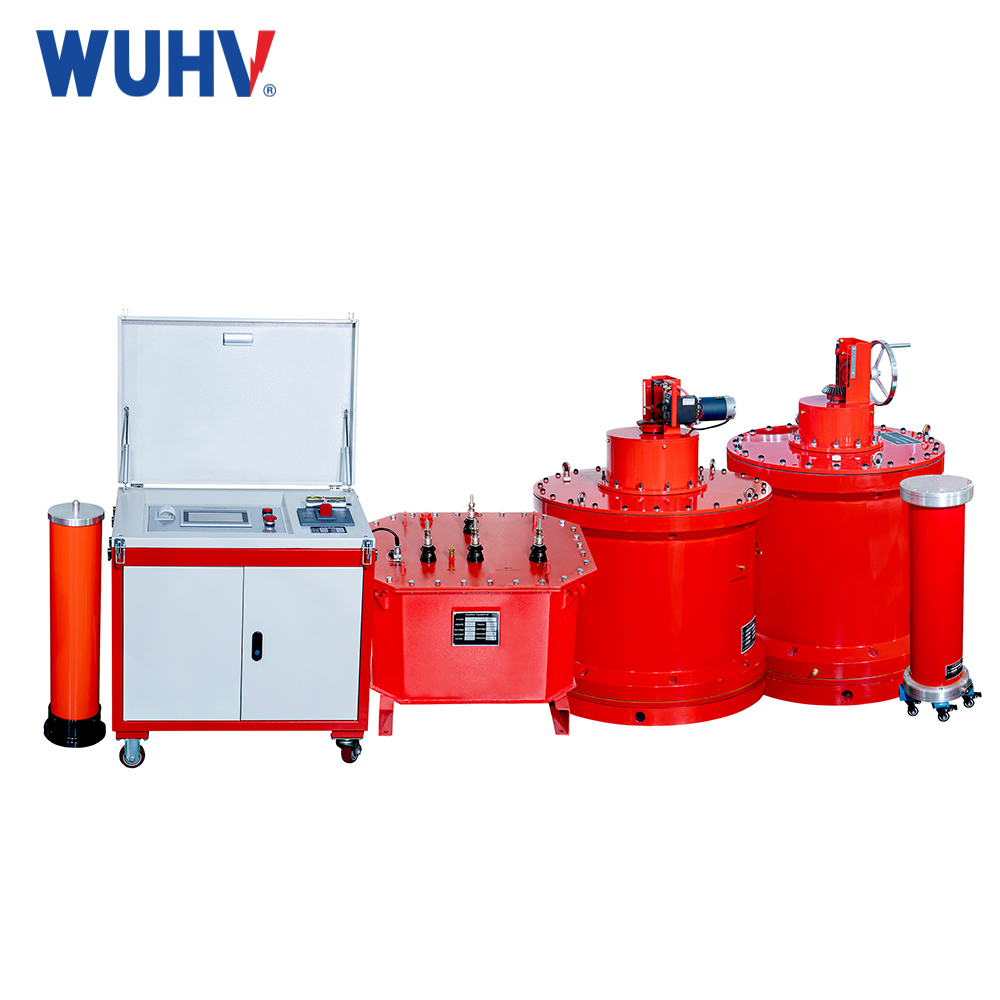
The insulation withstand voltage tester verifies the reliability of the equipment under extreme voltage according to standards such as GB 50316
Intelligent gradient boosting: automatically calculate the test voltage according to the formula of "power supply voltage × 2+1000V"
Multiple protection mechanisms: triple protection of overvoltage, overcurrent, and zero return detection
Environmental adaptability: Accurate testing within the temperature range of 15-35 ° C and humidity range of 45-75%
Test procedure: Insulation resistance test must be completed first, followed by voltage withstand test. A power supply company discovered internal cracks in the casing through voltage withstand testing, which cannot be detected in routine tests.
3、 Technological linkage: the multiplier effect of 1+1+1>3
Collaborative detection workflow: Leak detection and location of leakage points] -->B [Micro water testing and analysis of chamber humidity]
B -->C [Voltage withstand test to verify insulation strength]
C -->D [Comprehensive evaluation of equipment status]
Typical case:
In the comprehensive testing plan designed by Wuhan UHV Power Technology Co., Ltd. for a certain wind power booster station:
1. Through SF6 quantitative leak detection, it was found that the annual leakage rate of the composite electrical appliance was 0.83% (exceeding the standard value)
2. Micro water test shows that the moisture content in the gas chamber reaches 280 μ L/L (exceeding the warning value by 150%)
3. Partial discharge occurs during the power frequency withstand voltage test at 35kV
Diagnosis conclusion: Sealing failure leads to moisture infiltration, causing hydrolysis of insulation materials. By linking data and providing a 3-month advance warning, equipment explosion accidents can be avoided.
4、 How to achieve efficient and accurate comprehensive detection?
Three principles for equipment selection:
1. Compatibility: The leak detector needs to support particle filtering function to avoid interference from arc extinguishing chamber dust during detection
2. Intelligence: The micro water tester should have an automatic drying gas path to prevent sampling pollution
3. Safety: Voltage resistant equipment needs to be equipped with door interlock protection and wireless remote control function
Best practice plan:
Cycle management: Leakage testing is conducted once every quarter, micro water testing is conducted twice a year, and pressure testing is carried out in accordance with preventive testing procedures
Data linkage: Establish a three-dimensional health record of "insulation gas micro water" equipment
Technological innovation: Leak detection equipment using infrared thermal imaging fusion technology to improve the efficiency of detecting complex structures
The integrated testing platform developed by Wuhan UHV Power Technology Co., Ltd. has reduced the testing time for three items by 60% and improved data consistency by 45%. Its equipment achieves full monitoring of the detection process through a self diagnostic system and RS232 interface, and has been applied in multiple ultra-high voltage substations.
5、 Future trend: from troubleshooting to intelligent warning
With the penetration of IoT technology in the field of electricity, comprehensive testing is undergoing profound changes:
Intelligent sensor: an intelligent valve with built-in multi-dimensional sensors for pressure, humidity, and temperature, which monitors gas status in real time
Digital Twin System: Constructing Equipment Life Prediction Model Based on Detection Data
AI diagnostic platform: automatically correlate leakage rate, micro water value, and insulation strength change trend
Professional advice: Choose detection equipment that supports * * digital signal processing * * and cloud data management, and reserve interfaces for intelligent operation and maintenance. **The new generation detection system of Wuhan UHV Power Technology Co., Ltd. has achieved real-time viewing of test data and historical trend analysis through a mobile app, greatly improving decision-making efficiency.
Common Q&A on Power Operation and Maintenance
Q1: What are the specific hazards of SF6 gas leakage?
A: Besides greenhouse effect issues, leaks can directly reduce the insulation strength of equipment. When the leakage causes a 15% decrease in air pressure, the breaking capacity of the circuit breaker may decrease by 40%, which can easily lead to equipment explosion.
Q2: How to deal with excessive micro water content?
A: Firstly, investigate the aging of seals or the failure of adsorbents. For mild exceedance (150-300 μ L/L), cyclic drying regeneration can be used; Serious exceedance requires replacement of gas and adsorbent, and detection of solid insulation moisture content.
Q3: Why do we need to step up the voltage during the withstand voltage test?
A: Gradient boosting can avoid insulation damage caused by voltage surges. The standard requires gradually increasing the test value from zero (usually 2-3 times the rated voltage of the equipment), maintaining it for 1 minute, and then slowly lowering the voltage.
Q4: How to establish the cycle of the three tests?
A: Suggestion:
Leak detection: GIS equipment is inspected once every quarter, and additional testing is conducted after circuit breaker operation
Micro water: The new equipment will be tested after six months of operation, and once a year thereafter
Voltage resistance: Combined with preventive testing cycles, usually 3-6 years
Q5: Why do we need to perform correlation analysis on detection data?
A: A case study of a certain substation shows that the micro water value (200 μ L/L) alone is slightly excessive, but combined with leakage location, a sealing failure point was found, and partial discharge occurred during the withstand voltage test. Based on comprehensive judgment, it is necessary to immediately shut down for maintenance. Linkage analysis can significantly improve diagnostic accuracy.
Sharp tools make good work. Choosing detection equipment that meets national standards and has multi parameter correlation analysis capabilities is the first step in building a power safety defense line. The integrated testing solution of Wuhan UHV Power Technology Co., Ltd. is helping more and more power grid enterprises achieve equipment status that is "visible, accurate, and controllable".