Product introduction
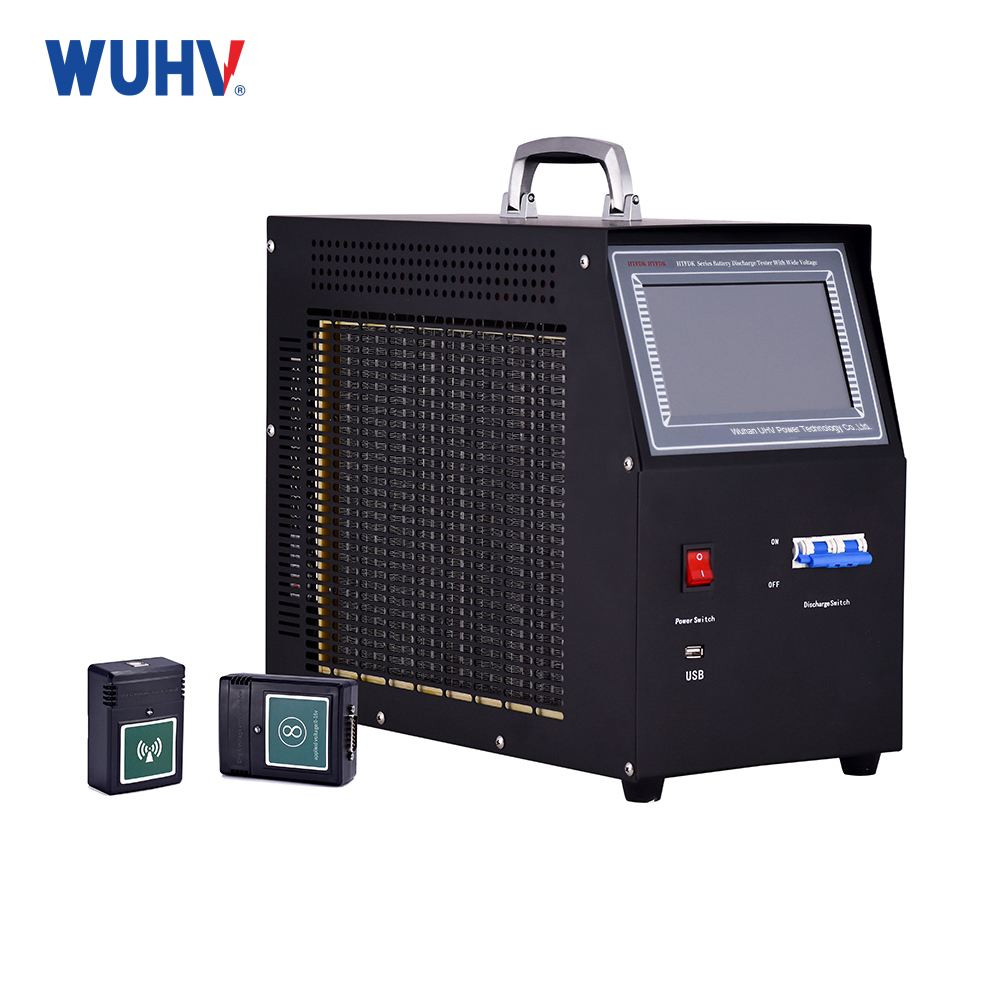
Wuhan UHV Power Technology Co.,Ltd., is a professional manufacturer and supplier of high-voltage power testing equipment in China.The UHV-220/30CF is a comprehensive battery testing device that integrates charging, discharging, capacity testing, cell monitoring, online monitoring, and battery activation functions. By setting charge and discharge parameters, it can perform constant-current discharge, capacity verification, and charge-discharge cycle testing on battery banks, while recording voltage, current, time, capacity, and energy data in real time, thereby accurately assessing the actual performance and state of health of the batteries.
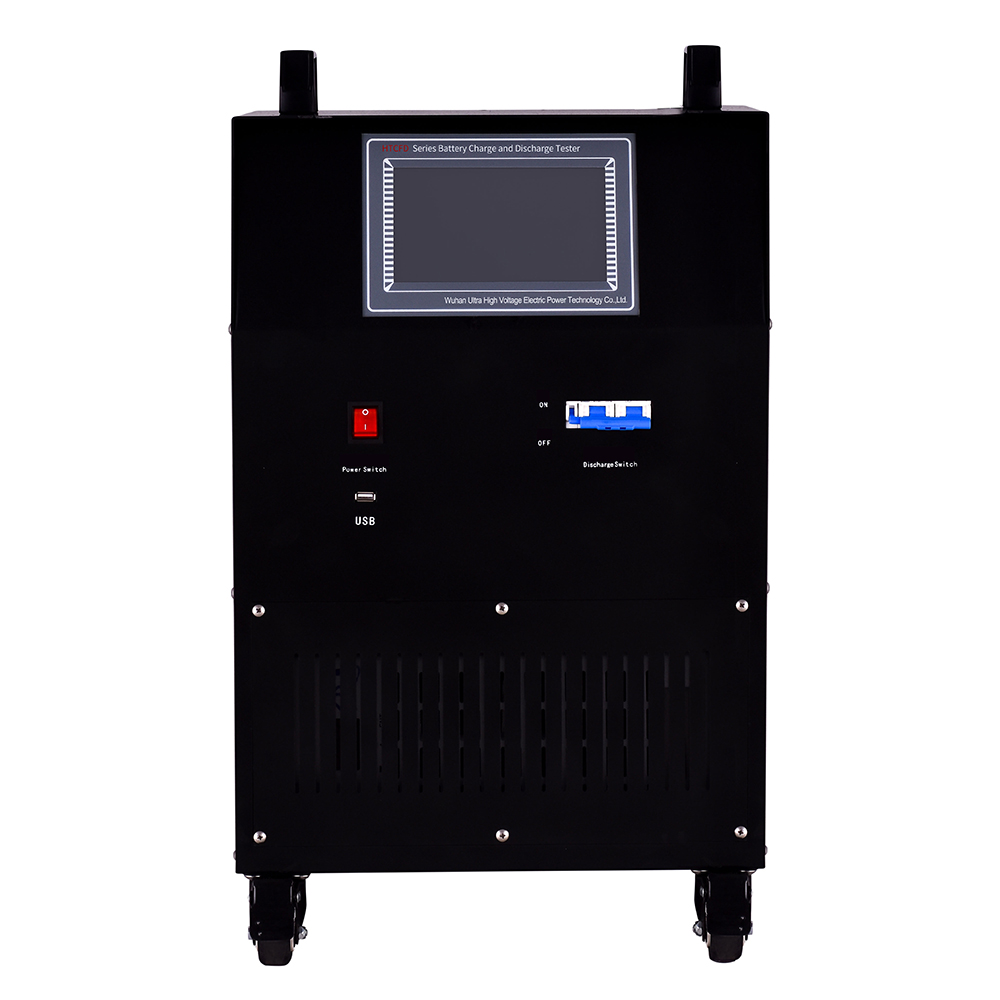 | 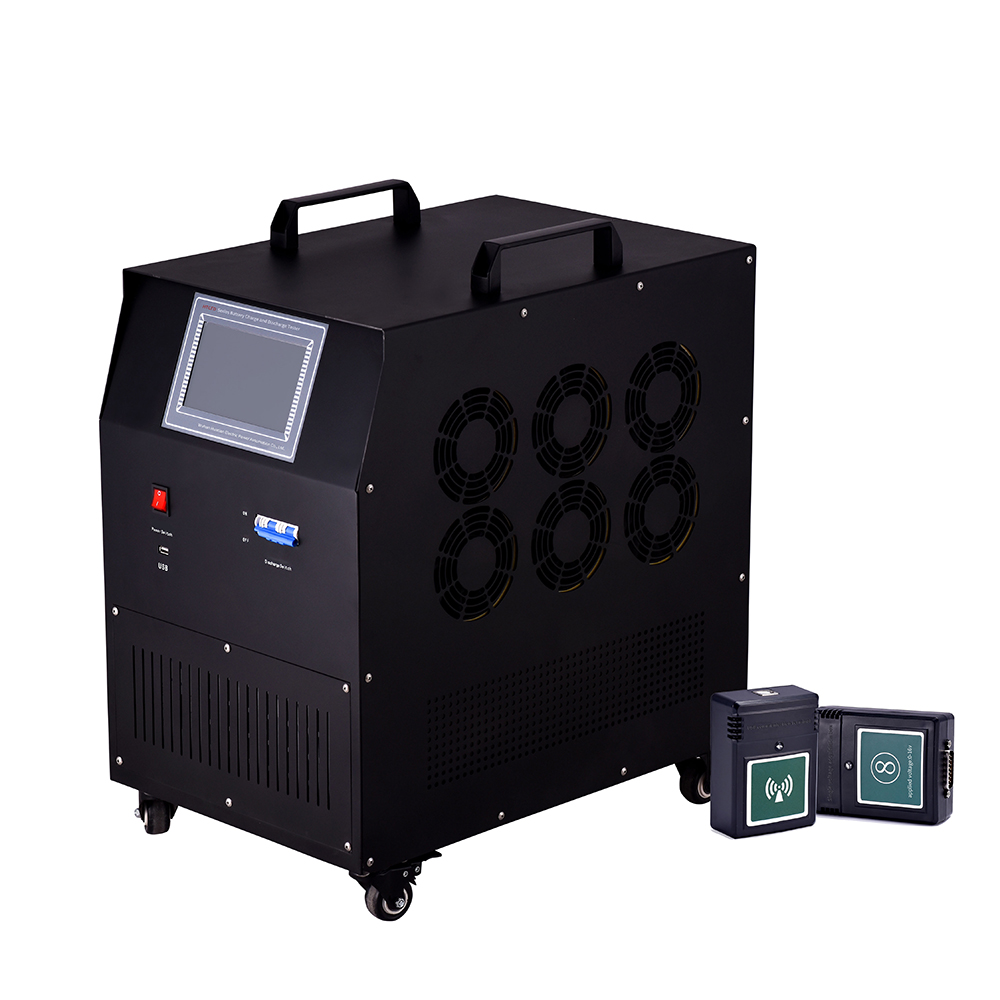 |
Product functions
1. Battery capacity testing (core function)
By setting the discharge current and allowing the battery to discharge under specified conditions, the following parameters are recorded simultaneously:
Discharge voltage variation
Discharge current
Discharge time
Output capacity (Ah)
Output energy (Wh)
2. Battery charge-discharge cycle testing
The equipment can automatically execute:
Charge → Discharge → Recharge → Redischarge
Cycle testing for battery life evaluation.
Primarily used for:
New battery life verification
Battery consistency analysis
Aging testing
R&D testing
3. Battery maintenance and activation
For long-term standby batteries (e.g., UPS, power system batteries), prolonged floating charging may lead to:
Capacity degradation
Imbalance among individual cells
Plate sulfation
Technical parameters
Technical Parameters
| Working mode | can be used alone, can be used simultaneously, can be remote control and status monitoring | |||
| Applicable battery | 48V | 110V | 220V | 380V |
| Charging voltage | 40~60V | 95~150V | 190~300V | 350~450V |
| Charging current | 10~150A | 1~80A | 1~40A | 1~20A |
| Discharge voltage | 10~60V | 80~135V | 80~270V | 300~460V |
| Discharge current | 0~150A | 0~200A | 0~100A | 0~60A |
| Accuracy of current | 1% | |||
| Voltage accuracy | 0.5% | |||
| Monomer voltage accuracy | 0.2% | |||
| Monomer voltage | 0.500V~16.00V(resolution 1mv) | |||
| Charge discharge time | 0 ~ 99 hours and 59 minutes | |||
| Power supply | AC:220V/380V | |||
| Cooling way | forced air cooling | |||
| Handling way | industrial universal wheel | |||
Work Environment
| Heat dissipation | forced air cooling |
| Temperature | working range: -5 ~ 50℃ storage temperature: -40 ~ 70℃ |
| Humidity | relative to humidity0 ~ 90% (40±2℃) |
| Altitude | rated altitude: 4000 m |
| Noise | ﹤60dB |
Working Power Supply
| Voltage | single-phase three-wire system: 220V AC (- 20% ~ +30%), frequency :45 ~ 65Hz |
| Withstand voltage test | input - housing: 2200V DC 1min |
| input-output: 2200V DC 1min | |
| output - housing: 700V DC 1min | |
| Security | meet EN610950 |
Wiring
| AC input | Gb socket, suitable for 1 ~ 1.5mm2cable |
| DC output | instrument 25 mm2Cable quick connect plug (red positive black negative) |
Nickname: Battery Charge Discharge Tester; Battery Charge Tester
Features
1. Five-in-one integration of charging, discharging, single-unit detection, online monitoring and activation, with complete functions and multi-purpose functions;
2. Single-cell voltage wireless monitoring function, each wireless monitoring module can monitor 12 monomers at the same time;
3. With Chinese background analysis software, with remote control discharge function;
4. The host has a USB interface and a 2G large-capacity internal data storage space;
5. Using dual CPUs to work together to ensure the safety, reliability and accuracy of the test;
6. Pause and parameter modification can be performed during the discharge process without terminating the discharge test.
Application Scenarios
Substations
Testing the capacity and state of health (SOH) of DC screen battery banks
Used for periodic battery maintenance and acceptance testing
Power plants
Testing the performance of backup power batteries at power stations
Ensuring reliable power supply during emergency situations
Telecom base stations / communication rooms
Testing the capacity of communication backup batteries
Ensuring operation of communication equipment during power outages
Data centers / UPS rooms
Testing the discharge capability of UPS battery banks
Preventing backup power failure
New energy storage power stations
Testing the performance of energy storage battery clusters
Used for lithium battery capacity and cycle life testing
Battery manufacturers
Used for factory testing of cells, battery modules, and PACKs
Performing charge-discharge cycle testing
New energy vehicle industry
Testing the performance and degradation of power batteries
Used for battery maintenance and R&D analysis
Research institutions / laboratories
Used for new battery R&D and performance research
FAQs
Q: What is a Battery Charge and Discharge Tester?
A: A Battery Charge and Discharge Tester is a testing device used to evaluate the charging and discharging performance and capacity status of batteries. It can assess battery health, remaining capacity, and service life.
Q: What types of batteries is this device suitable for?
A: It is suitable for:
Lead-acid batteries
Valve-regulated lead-acid batteries (VRLA)
UPS batteries
Lithium iron phosphate (LiFePO₄) batteries
Ternary lithium batteries
Energy storage battery packs, and more.
Q: Why is battery charge-discharge testing necessary?
A: Through testing, it is possible to:
Determine whether the actual battery capacity meets the specified standards
Identify batteries with capacity degradation
Prevent backup power failures in advance
Extend battery service life
Improve the reliability of the power supply system
Q: What is the difference between a battery charge-discharge tester and an ordinary battery charger?
A: An ordinary battery charger can only charge the battery, while a battery charge-discharge tester can:
Perform active discharge testing
Measure capacity
Record data
Analyze battery performance