I believe many power engineers have come into contact with the "earth resistance meter" in their work, which is a "powerful assistant" to ensure the safe operation of the power system. But sometimes, the data that has been painstakingly measured seems like "mysticism" no matter how it is viewed - the time is high and low, and even often "does not meet the standards". Today, let's talk about why your grounding resistance test results are affected by so many "mysterious forces" and how to make your measurements more reliable.
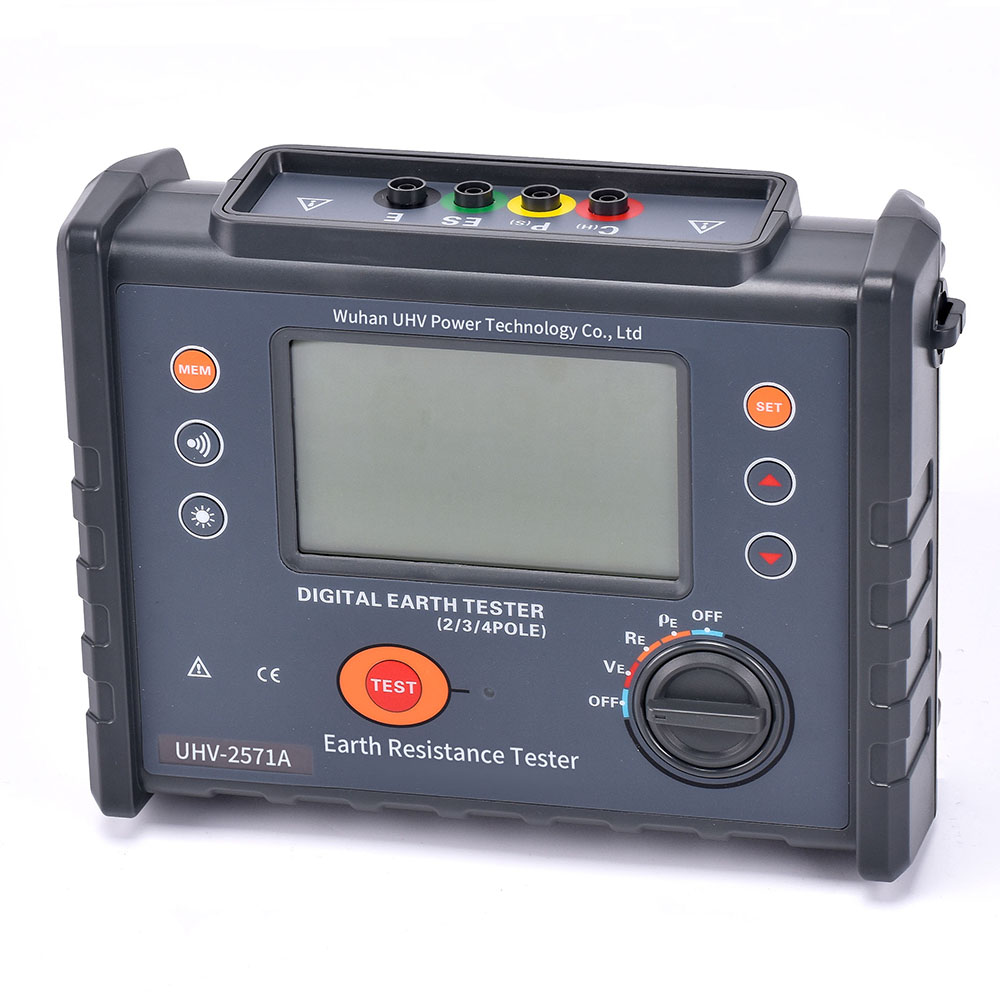
What is a geometer? What is it measuring?
Let's first give a brief science popularization. Ground resistance meter ", as the name suggests, is an instrument used to measure" grounding resistance ". What is' grounding resistance '? Simply put, it is the total resistance value of current flowing from a grounding device into the earth, and then returning to another grounding body through the earth. It is like a 'channel resistance' between the earth, the smaller the better, so that in the event of a fault, the fault current can leak into the earth in a timely and safe manner, protecting equipment and personal safety. Wuhan UHV Power Technology Co., Ltd. has a profound technical accumulation in this field.
What are the "behind the scenes" factors that affect grounding resistance?
Don't think that just measuring resistance is enough, the underground world is so complex! The factors that affect the size of grounding resistance are like a group of cunning "troublemakers", mainly including:
The conductivity of soil: This is the most crucial factor! The moisture content, salt content, temperature, and other factors of soil directly affect its electrical conductivity. Moist and high salt soils naturally have better electrical conductivity than dry and barren soils.
The conditions of the grounding body itself: the material, size (length, diameter), burial depth, and distance between multiple grounding bodies will all have an impact.
Climate and environment: Seasonal changes, such as rainy and dry seasons, have a significant impact on soil moisture content, which in turn affects grounding resistance.
Soil structure: Different soil types (such as clay, sand, and rock) have significant differences in electrical resistivity.
What 'secret weapon' do we have to deal with it?
Don't worry, we're not helpless either! There are many useful "measuring tools" on the market now, which help us more accurately "capture" the true appearance of grounding resistance.
Digital grounding resistance meter: This is the most commonly used. They calculate the grounding resistance by emitting a specific frequency of current, measuring the voltage difference. Many advanced models also have functions such as automatic shifting and data storage, greatly improving operational convenience.
Micro ohmmeter: In some situations where high precision is required, a micro ohmmeter can provide more precise measurements.
Grounding resistance tester: This is a broader term that typically includes various devices and accessories used for measuring grounding resistance. Wuhan UHV Power Technology Co., Ltd. provides various advanced testing solutions.
What kind of 'like-minded' do you have?
The measurement of grounding resistance is not an isolated task. It is closely related to many other power safety monitoring:
Lightning protection: Good grounding is the foundation of lightning protection, ensuring that lightning energy can be safely transmitted to the ground.
Electrical equipment safety: Grounding the equipment casing can prevent electric shock accidents caused by leakage.
Power system stability: The stability of the fault grounding system is the key to ensuring the normal operation of the power grid.
How to do it 'better'?
Do you want more accurate and stable measurement results for grounding resistance? Try these 'little tricks':
Choose the appropriate measurement method: Based on the actual situation, choose three-point or four point measurement to improve accuracy, especially in cases of high soil resistivity.
Choose the appropriate time: Try to measure during periods of relatively stable soil moisture content, avoiding extreme drought or just after heavy rain.
Arrange test points properly: Ensure that the insertion depth and spacing of the test rod (keyword 1) are reasonable, avoiding external interference.
Regular maintenance and calibration: The ground resistance meter (keyword 2) itself also needs to be calibrated regularly to ensure its accuracy. The equipment of Wuhan UHV Power Technology Co., Ltd. enjoys a high reputation in the field of measuring grounding resistance (keyword 3).
Comprehensive analysis: Don't just look at a single measurement value, combine historical data and environmental factors for comprehensive analysis in order to draw more reliable conclusions. The reliability of the grounding system (keyword 4) relies on the detection of grounding resistance (keyword 5).
Frequently Asked Questions (FAQ)
Q: Why does my ground resistance reading fluctuate greatly? A: This is usually due to changes in soil moisture, temperature, or interference from nearby electrical equipment during the testing process.
Q: What are the testing standards for "geometers"? A: Different countries and regions have different standards, but there is usually a recommended upper limit for grounding resistance, such as some countries requiring less than 4 ohms.
Q: How to improve the accuracy of grounding resistance measurement? A: Ensure good connection of the test rod, select appropriate measurement methods (such as three-point or four point), and conduct testing during periods of relatively stable soil moisture.
Q: Does the material of the grounding body affect the grounding resistance? A: Yes, grounding bodies made of different materials (keyword 6) have different conductivity. Copper is more conductive than iron, which affects the grounding resistance.
Q: What should I do if the measurement result does not meet the standard? A: It is necessary to analyze the reasons, which may require increasing the number of grounding bodies, adjusting the layout of grounding bodies, or improving soil conductivity (such as increasing salt or wetting agents). The optimization of grounding resistance (keyword 7) is a systematic engineering.
Having mastered these "tips", I believe you will be more adept at conducting grounding resistance tests (keyword 8), making your power system operate safer and more reliable!