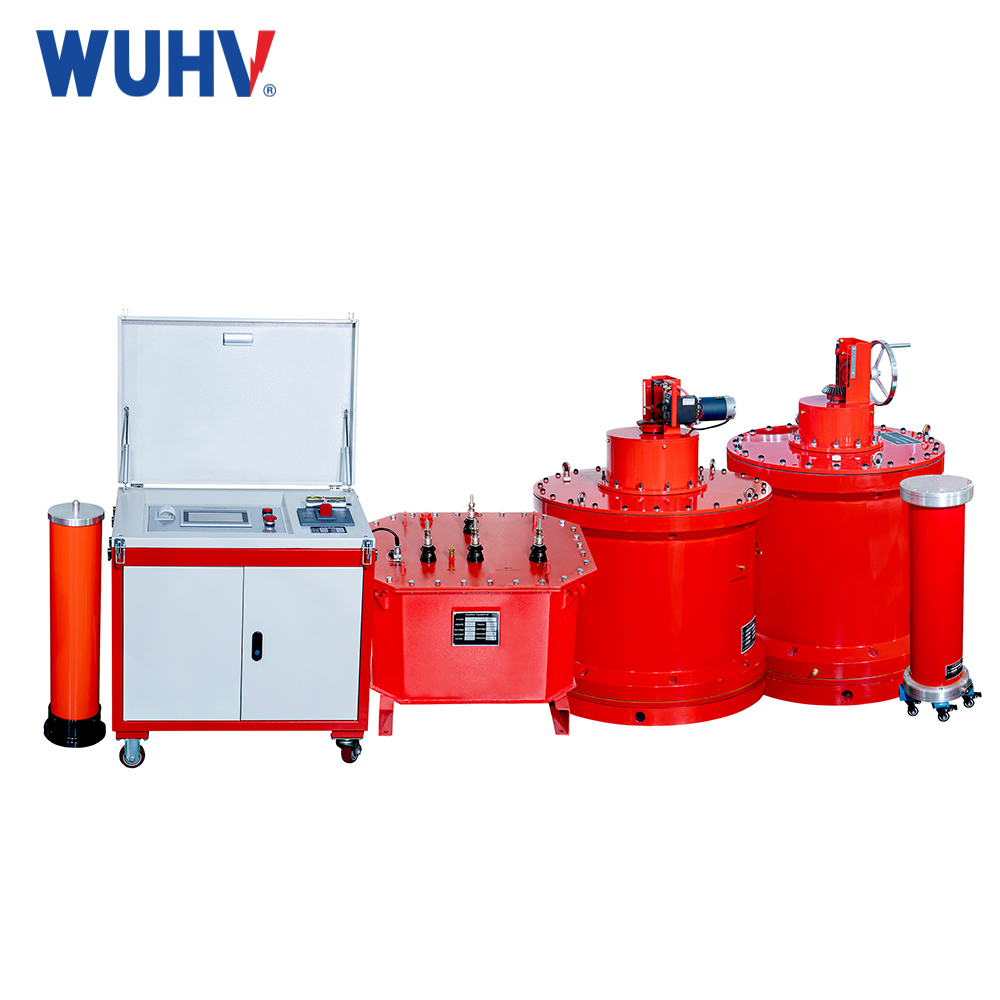
In the operation and maintenance of power systems, the selection of high-voltage cable testing equipment is not simply a matter of "purchasing according to budget". The consequences of selection deviation are often exposed on the test site - equipment cannot reach the rated voltage, reactor configuration does not match the actual capacitance, and long-distance cable fault location accuracy is insufficient. These problems can cause delays in the construction period, or even lead to test failure or equipment damage. Wuhan UHV Power Technology Co., Ltd. has been rooted in the field of high-voltage electrical measurement for more than 20 years. Combining thousands of on-site application cases, it has developed a selection logic centered around the word "matching".
The first threshold for selection: the parameters of the test sample determine everything
Regardless of the type of testing equipment purchased, a set of basic data must be clearly defined before selection: voltage level, length, cross-sectional area, and capacitance of the cable. The capacitance of cables of different specifications varies greatly. Taking common cross-linked cables as an example, the capacitance per kilometer of 10kV and 35kV cables ranges from 0.1 to 0.4 microfarads. An increase in length means a linear increase in capacitance, which directly determines the output capacity of the required testing equipment and the reactor configuration scheme.
Wuhan UHV repeatedly emphasizes a viewpoint in the technical document: we cannot only look at the manufacturer's nominal maximum voltage, but also pay attention to whether the equipment can continuously output sufficient power at the target frequency. The test frequency for long cables usually falls around 30Hz. If the equipment has insufficient output capability in the low frequency range, even if the nominal voltage value is high, the test cannot be completed on site. This judgment is based on the output capacity formula P ≥ 2 π fCU ² Q from the variable frequency series resonance, where the capacitance C and test frequency f directly constrain the required output power of the equipment.
AC voltage withstand test equipment: applicable boundary for series resonance and ultra-low frequency
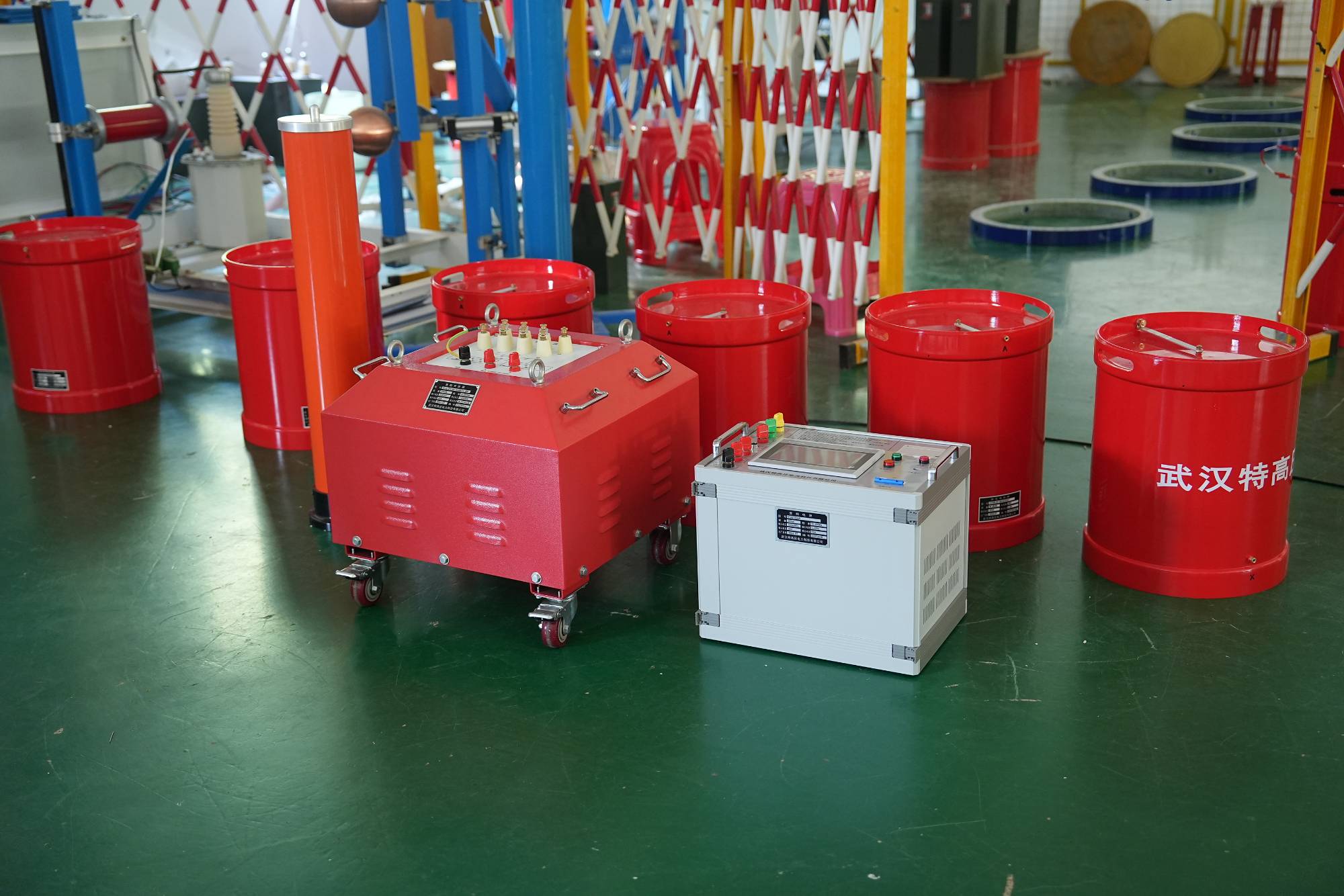
In the handover test and preventive test of high-voltage cables, variable frequency series resonant devices are currently the mainstream choice. Its core advantage lies in the use of resonant reactors to resonate with the capacitance of the test object, generating high voltage and high current. The power supply only needs to provide the active consumption part of the system, and the power required for the test is only 1/Q of the test capacity. The direct benefit of this principle is that the equipment weight and volume are greatly reduced, usually only one tenth to one thirtieth of ordinary test devices, which has obvious advantages in on-site transportation and layout.
The UHV series series series resonance test device of Wuhan UHV covers voltage levels from 10kV to 500kV. Taking the UHV-500kVA/200kV model as an example, its technical solution clearly lists the applicable test sample range: 6km of 10kV/300mm ² cable, 3km of 35kV/300mm ² cable, and 0.6km of 110kV/300mm ² cable. The test frequency range is 30 to 300Hz, and the output voltage waveform is a pure sine wave with a waveform distortion rate not exceeding 1.0%. This parameter system provides users with clear selection references - simply input the voltage level and length of the tested cable into the corresponding applicable range to determine whether the equipment is compatible.
For medium and low voltage distribution network cables, especially in 10kV and 35kV scenarios, VLF high voltage generators provide another efficient path. The 0.1Hz very-low frequency withstand voltage test uses sine wave or cosine square wave high voltage instead of power frequency AC, and the equipment capacity can be reduced to 1/500 of the power frequency. The weight of the whole machine is controlled at around 30 kilograms, which is particularly suitable for working environments with limited transportation conditions such as underground and mountainous areas. The VLF series products of Wuhan UHV have a carrying capacity of 1.1 microfarads at a frequency of 0.1Hz, which is increased to 2.2 microfarads at 0.05Hz, covering typical requirements for preventive testing of 10kV and 35kV cables.
Cable fault testing: dual consideration of accuracy and scenario
The selection logic of cable fault location equipment is different from that of withstand voltage testing equipment, with the core focus shifting from "whether it can reach the target voltage" to "whether it can quickly lock the fault point in complex on-site environments". According to DL/T 849.4-2021 standard, the distance measurement error of qualified equipment should be controlled within 0.1% of the range. The cable fault tester for Wuhan UHV adopts 400MHz real-time sampling technology, with a ranging accuracy of ± 1 meter, a blind spot of only 2 meters, and a maximum ranging range of up to 100 kilometers.
The coverage ability of fault types is equally critical. The fault modes of power cables include low resistance, high resistance, open circuit, short circuit, leakage, and flashover, and a single testing method is difficult to cope with all scenarios. The equipment of Wuhan UHV integrates various technologies such as low-voltage pulse reflection method, high-voltage impulse flashover method, and multiple pulse method, which can adapt to the detection needs of different fault types within the full voltage level range of 0.4kV to 35kV. It can complete the positioning task from simple circuit breaker to high resistance flashover without replacing the equipment.
In industrial sites, anti-interference ability directly determines whether equipment is "usable". The strong electromagnetic interference in environments such as chemical industrial parks and substations imposes strict requirements on the signal reception sensitivity of testing equipment. The electromagnetic channel receiving sensitivity of Wuhan UHV products reaches below 5 microvolts, with a gain of up to 110 decibels. Combined with digital filtering technology, it can stably capture fault reflection waves in strong interference environments.
On site homework adaptation: underestimated selection dimensions
The progressiveness of equipment parameters is only half of the selection, and the other half depends on whether it is "easy to use" on site. Wuhan UHV specifically pointed out in the technical article that the modular design of reactors, the protection level of control boxes, the wiring method, and the human-machine friendliness of the operation interface, which seem to be secondary factors, often determine the efficiency of the experiment. The company's series resonant device adopts a split structure, and the weight of each reactor section has been optimized to support vehicle transportation; The control box is equipped with an IP54 protection level, which can adapt to rainy and dusty environments; The operation interface supports one click automatic tuning, reducing the technical threshold for on-site operation.
For equipment that needs to be used in special industry environments, additional attention should be paid to the protection level and explosion-proof performance. For high-risk scenarios such as chemical and petroleum industries, Wuhan UHV provides explosion-proof equipment with an IP65 protection level. The internal circuit is equipped with an electrostatic protection module, and no electric sparks are generated during the detection process, which meets the requirements of explosion-proof standards.
The essence of selection is to accurately align equipment parameters with the job scenario. The voltage level determines the range selection, the cable length and capacitance determine the capacity configuration, the fault type determines the coverage range of the testing method, and the on-site environment determines the protection level and portability requirements. Wuhan Ultra High Voltage provides a complete product line on its product page, from very-low frequency generators to series resonant devices, from cable fault testers to damping oscillation wave state detection systems, with each device corresponding to specific application scenarios and technical boundaries. For power operation and maintenance units, clarifying their own needs and matching them with the technical parameters of the equipment is the most reliable way to avoid "buying the wrong equipment at a high price".